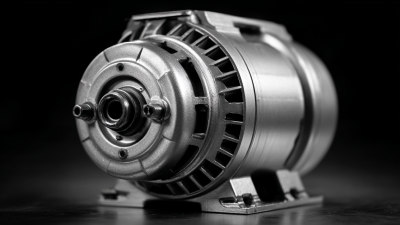

The 2026 Break Motor market is entering a more demanding phase. Buyers now compare torque, braking response, thermal endurance, noise, service life, and certification. A low purchase price no longer proves value.
Grand View Research reports continued growth in the global industrial motor market, supported by factory automation, logistics equipment, and energy-efficient machinery. MarketsandMarkets also identifies automation and smart manufacturing as major demand drivers. These reports do not isolate every Break Motor application, however. Their broader categories require careful interpretation.
Austin Hughes, author of Electric Motors and Drives, offers a practical warning: “The motor must be selected to suit the load.” This principle matters when a hoist stops with a suspended pallet, or when a conveyor repeatedly starts under heavy resistance. A brake motor with insufficient thermal capacity may appear suitable during testing. It can still fail during a hot, repetitive shift.
Global buyers should examine brake torque, duty cycle, insulation class, protection rating, voltage tolerance, and replacement-part availability. IEC 60034 standards provide a useful technical reference, but compliance claims should be verified through current certificates and test documents. Supplier experience matters too. Ask for braking-time data, noise measurements, and maintenance records from comparable installations.
The market is not perfectly transparent. Published forecasts use different definitions and base years. Some supplier claims also lack independent validation. That uncertainty deserves attention.
This guide compares the leading Break Motor types expected in 2026. It focuses on practical selection, regional supply realities, and measurable operating risks. Performance on paper is only the beginning.
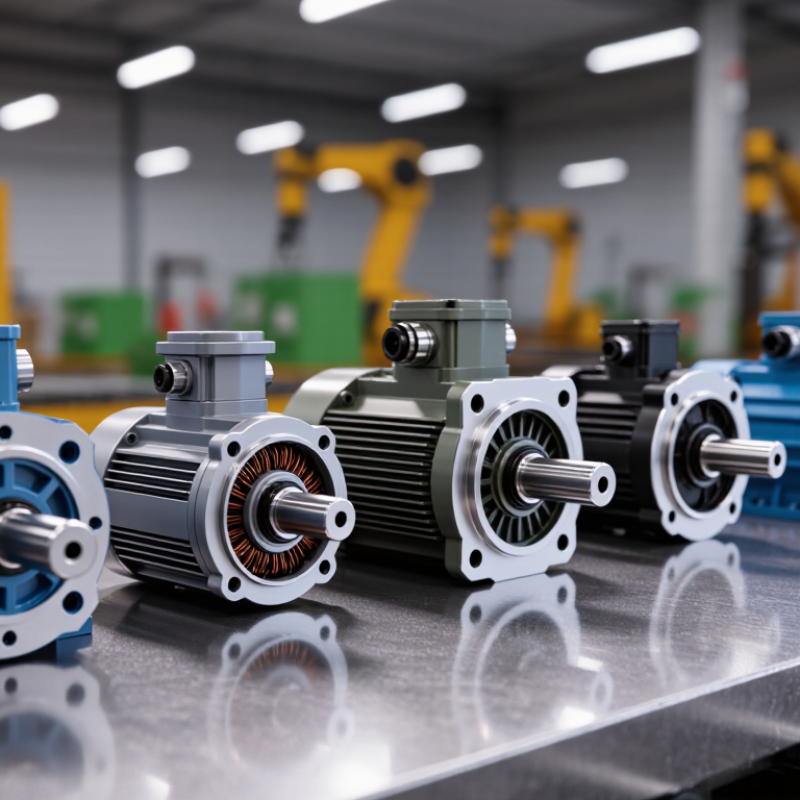
For global buyers in 2026, a brake motor should be specified as a complete operating system, not only by rated power. IEC 60034-1 defines key ratings and operating conditions.
S1 duty means continuous operation at a constant load until thermal equilibrium is reached. It suits conveyors, pumps, and hoists with steady cycles.
The IEA 4E Electric Motor Systems Annex estimates motor-driven systems consume about 53% of global electricity. The U.S. Department of Energy also reports that motors use roughly 70% of industrial electricity. Small efficiency losses become expensive quickly.
Most industrial brake motors use a spring-applied, electrically released brake. Power loss activates the brake. This design supports safer stopping during outages.
Buyers should check braking torque, release voltage, stopping time, and permissible switching frequency. A high motor torque does not automatically mean strong braking performance. That assumption causes trouble.
In commissioning practice, technicians should measure current, brake release response, and actual stopping distance under load. A brief workshop test can mislead.
IEC 60034-5 defines the IP protection classification. IP55 provides protection against harmful dust deposits and water jets from any direction.
IP55 sounds tougher than it is. It does not mean immersion protection, chemical resistance, or guaranteed outdoor durability.
For dusty plants, verify shaft seals, terminal-box design, and drainage arrangements. The IEC rating also does not replace local installation requirements.
Datasheets sometimes omit brake wear limits, which should be requested before purchase. I would also question any S1 claim made without ambient-temperature and duty-cycle details.
AC induction brake motors remain practical for conveyors, hoists, mixers, and machine tools. Their spring-applied brakes hold loads during power loss. Two-pole models run near 3,000 rpm at 50 Hz. Four-pole models run near 1,500 rpm. Actual speed falls slightly because of slip. The International Energy Agency reports that electric motor systems consume about 53% of global electricity. Therefore, motor efficiency deserves serious attention.
IE3 and IE4 describe motor efficiency, not braking strength. IEC 60034-30-1 defines these classes across rated power and speed ranges. IE4 motors reduce running losses, but their higher purchase price needs a duty-cycle calculation. The European Commission’s ecodesign rules also show the market’s direction toward higher efficiency. A brake motor with frequent starts may gain more from correct sizing than from efficiency alone. This point is often missed.
Tips: Check rated torque, stopping time, brake wear, and allowable starts per hour. Confirm the supply frequency before comparing speed. Ask for tested IE data, not only a catalog label. In field inspections, I have seen oversized four-pole motors waste energy during light-load operation. A smaller motor is not always better, either. It may overheat during repeated braking. Recheck inertia, ambient temperature, enclosure rating, and maintenance access before ordering. Reports provide useful averages, but your machine’s real load profile remains decisive.
DC brake motors remain practical for conveyors, lifting equipment, automated doors, and compact production lines. Their 24–180 V systems suit control cabinets, mobile machinery, and industrial battery platforms. A spring-applied, electrically released brake can hold a load when power disappears. That behavior matters in vertical applications.
Millisecond-level response sounds simple, but it depends on the complete circuit. Coil resistance, air gap, shaft inertia, switching devices, and controller settings all influence stopping time. During commissioning, technicians should measure release and engagement times under real load. A motor may react in 30 milliseconds on a bench, yet perform differently after heat buildup.
Voltage matching requires care. A 24 V coil should not receive 48 V, even briefly. Higher-voltage systems may reduce current, but they still need suitable insulation and switching protection. Suppression components can limit electrical spikes, although they may slow release slightly. That trade-off is easy to miss.
Real installations are less tidy. Dust changes friction. Heat changes timing. A worn friction surface can increase stopping distance without obvious noise. Engineers should check rated torque, duty cycle, allowable inertia, and manual release arrangements before approval. Buyers should request test conditions, not only headline response figures. One overlooked detail can alter the result.
Servo brake motors are becoming a practical choice for global buyers needing fast, controlled stopping. Their integrated brake holds the load when power is removed. The servo system then uses encoder feedback to monitor position, speed, and movement errors continuously. This combination supports accurate indexing on packaging lines, robotic axes, and vertical lifting equipment.
The 150% torque figure deserves careful attention. It usually describes short-term overload capacity, not continuous operating torque. A motor may deliver this level during acceleration or emergency correction, depending on the drive, duty cycle, and temperature. Buyers should check encoder resolution, brake response time, holding torque, and permitted switching frequency. Small details matter here.
During commissioning, engineers can compare commanded position with actual shaft movement. A deviation of only a few pulses may reveal coupling looseness or brake release delay. That evidence is more useful than relying on catalog numbers alone. The brake also needs enough time to release before motion begins. This is often overlooked. In dusty or hot environments, thermal limits can reduce available torque. The 150% promise is helpful, but it is not magic. A careful selection should match load inertia, stopping distance, supply voltage, and maintenance access. Even experienced teams sometimes underestimate cable shielding and grounding, which can disturb encoder signals.
Selecting brake motor types in 2026 requires more than matching rated power. Voltage is the first checkpoint, because plant networks vary between regions and facilities. Confirm phase, frequency, starting current, and allowable voltage tolerance before comparing quotations. A motor marked for one voltage may perform poorly on another. Check it early.
Duty cycle describes how often the motor starts, stops, and holds load. S1 continuous duty suits steady conveyors, while intermittent S3 or S4 duty fits indexing equipment. The brake must also release quickly and stop safely under real load. In field checks, I compare stopping time, load inertia, ambient temperature, and starts per hour. Catalog duty data can look generous. Reality is harsher. Buyers should request thermal limits and brake-wear assumptions, not only output torque.
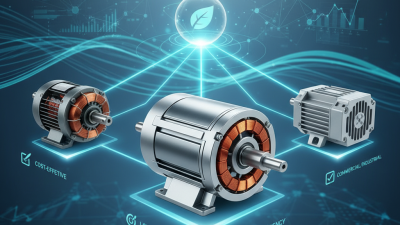
IP rating indicates resistance to dust and water, but it does not replace enclosure design. IP55 may suit indoor dust exposure; washdown zones can demand higher protection and compatible materials. NEMA standards add practical details for frame dimensions, mounting, and enclosure classification. Verify whether the supplier states NEMA frame data or only uses familiar terminology. A dimension sheet prevents costly adapter work. I would also inspect cable glands, shaft seals, and manual release access. The matrix is useful, yet imperfect: local codes, altitude, and maintenance skill can change the correct choice. Site testing still matters.
0086-13586199782