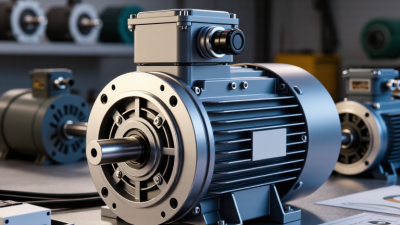
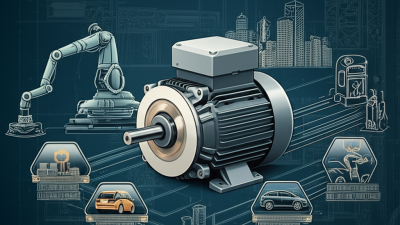
China has become a major sourcing base for global Ac Electric Motor buyers. Its suppliers serve factories, water systems, compressors, conveyors, fans, and agricultural equipment. However, product variety can create uncertainty. A polished catalog does not always reveal operating performance.
This guide introduces leading Chinese suppliers through practical purchasing criteria. These include rated power, voltage range, frequency, efficiency class, insulation grade, enclosure protection, bearing quality, and delivery capability. Buyers should also examine test reports, factory audits, sample results, and after-sales procedures. A motor may look identical to another model, yet its copper content, cooling design, or winding process can differ significantly.
Nikola Tesla, whose work shaped modern alternating-current technology, once said, “The alternating current system is the system of the future.” His statement still reflects the importance of dependable AC technology. Yet modern buyers need more than historical confidence. They need measurable evidence.
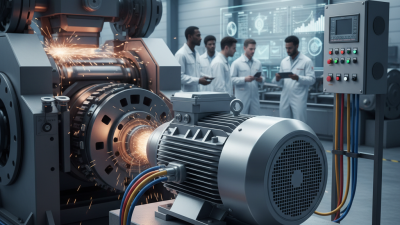
Experienced sourcing teams often request vibration data, temperature-rise results, noise readings, and no-load current measurements. They also confirm whether the supplier can maintain consistent quality across large orders. Small details matter. A loose terminal. An unclear nameplate. A delayed spare part.
This article evaluates China’s top AC motor suppliers from a global buyer’s perspective. It considers technical expertise, manufacturing experience, certifications, customization, communication, and reliability. The assessment is not perfect, because supplier performance can change over time. Regional service capacity may also receive less attention than it deserves. Therefore, buyers should verify current information before signing contracts or approving production.
AC electric motor suppliers support factories, water systems, HVAC equipment, conveyors, and agricultural machinery worldwide. Their role is becoming more strategic as energy prices and efficiency requirements rise. The International Energy Agency reports that electric motor systems consume about 46% of global electricity. The U.S. Department of Energy also estimates that motor-driven equipment uses nearly 70% of industrial electricity in the United States. These figures explain why buyers increasingly compare efficiency, service life, and maintenance support, not only purchase prices.
Global suppliers must manage different voltage standards, frequencies, climates, and certification requirements. IEC 60034-30-1 efficiency classes help buyers compare motor performance across markets. In practical procurement work, key checks include rated output, starting torque, enclosure protection, insulation quality, and spare-parts access. A motor may perform well in a catalog. It may fail in a dusty workshop.
Tips: Ask for verified test reports, efficiency data at partial load, and warranty terms. Confirm whether the supplier can provide drawings, installation guidance, and local technical support. Review delivery records, but do not treat a low price as proof of value.
Market reports from Fortune Business Insights and similar research firms continue to forecast steady growth for the global electric motor market, driven by industrial automation, infrastructure upgrades, and energy-saving projects. However, forecasts differ by region and motor category. Buyers should treat projections as planning tools, not promises. Supplier credibility depends on traceable data, consistent quality control, and clear communication after delivery.
Global buyers usually compare three AC motor families: squirrel-cage induction, permanent-magnet synchronous, and synchronous-reluctance motors. Induction motors suit pumps, fans, compressors, and conveyors because their construction is simple and serviceable. Permanent-magnet designs can reduce losses in variable-speed applications. Synchronous-reluctance motors offer another option where efficiency and low rotor maintenance matter. The choice is not automatic.
The International Energy Agency reports that electric motor systems consume about 46% of global electricity. This figure makes efficiency more than a purchasing detail. Buyers should request IEC 60034 test data, rated output, voltage, frequency, current, speed, torque, and efficiency class. IE3 is common for high-efficiency equipment, while IE4 may lower operating losses in continuous-duty installations. Check the actual duty point.
Small details often decide reliability. Specify S1 continuous duty, insulation class F, IP55 protection, and a suitable ambient-temperature rating for industrial environments. Confirm 50 Hz or 60 Hz compatibility before shipment. For inverter operation, ask about bearing protection, cooling performance, and permissible speed range. A motor marked 400 V may not perform identically under every drive setting. That is easy to overlook.
The U.S. Department of Energy notes that motor-driven systems represent a major share of industrial electricity use. Yet catalog efficiency can mislead when a motor runs far below its rated load. Independent testing and verified load profiles remain essential. Some specifications still need review.
When evaluating China’s AC electric motor suppliers for international purchasing, begin with evidence rather than attractive quotations. The International Energy Agency reports that motor-driven systems consume roughly half of global electricity. Small efficiency differences can therefore increase lifetime costs. Request rated output, voltage, frequency, speed, duty cycle, insulation class, and efficiency data under IEC 60034-30-1. A supplier that cannot explain test conditions deserves caution.
Inspect production capability beyond factory photographs. Review winding equipment, rotor balancing, bearing control, and final-load testing. Ask for recent test reports from accredited laboratories, not only internal certificates. For a 15 kW motor, compare measured efficiency, starting current, noise, vibration, and temperature rise. The United Nations Environment Programme’s United for Efficiency initiative identifies minimum energy-performance standards as a key method for reducing motor-system electricity consumption. Compliance paperwork matters.
Sampling should include the exact frame size and terminal-box arrangement required for installation. Check whether drawings match the delivered motor; this is where projects sometimes fail. Confirm corrosion protection, packaging for sea freight, spare-bearing availability, and response times after delivery. Contract terms should define inspection points, acceptable tolerances, and remedies for nonconformity. I would not trust the lowest bid alone. It may exclude testing, documentation, or realistic lead time. A careful supplier comparison is slower, and my own checklist would still need revision after the first shipment.
When global buyers evaluate AC electric motor suppliers, manufacturing standards should be checked beyond catalog claims. IEC 60034 requirements provide a useful reference for motor performance, efficiency, temperature rise, and testing. However, compliance depends on the tested model and configuration.
A reliable supplier should maintain a documented quality system, often aligned with ISO 9001. Incoming inspections may verify copper wire, steel laminations, bearings, insulation materials, and casting dimensions. Production teams should record winding resistance, insulation resistance, hipot results, vibration, noise, and operating temperature. Calibrated instruments matter. Small measurement errors can hide real defects.
Certification documents need careful review. Buyers should confirm the certificate scope, issuing body, validity, and matching product ratings. Regional marks may apply differently to voltage, efficiency, and safety requirements. Factory traceability is also important. Each motor should connect to batch records, operator checks, test data, and final inspection results. Load testing under realistic conditions gives stronger evidence than no-load testing alone.
Quality control is never flawless. A supplier may pass routine checks yet miss a bearing issue during long-term operation. That weakness deserves discussion, not concealment. Buyers can request sample reports, corrective-action records, and independent inspections before shipment. Clear communication about tolerances, duty cycles, ambient temperature, and installation conditions prevents avoidable failures. A lower price can look attractive, but inconsistent testing often creates higher costs later.
This reference waveform represents a balanced 230 V RMS, 50 Hz AC supply. The calculated peak voltage is approximately 325 V, consistent with the relationship between RMS and peak voltage for a sine wave. Buyers can use this benchmark when reviewing motor design, electrical testing, insulation verification, and final quality-control records against applicable IEC 60034 requirements.
China Top AC Electric Motor Suppliers for Global Buyers
Shipping is more than a quoted freight cost. UNCTAD’s Review of Maritime Transport 2024 reports that over 80% of global merchandise trade moves by sea. Buyers should confirm the shipping term, port, insurance responsibility, and export documents before payment. Ask for carton dimensions, gross weight, HS code, and a realistic production schedule. A motor may leave the factory quickly, yet spend weeks waiting for a vessel. Container disruptions can also change landed costs without warning.
After-sales service separates a dependable supplier from a cheap one. Request written warranty terms, response times, troubleshooting procedures, and replacement-part availability. Suppliers should provide test reports covering voltage, frequency, efficiency, insulation, and temperature rise. IEC 60034 offers widely used requirements for rotating electrical machines, so compliance evidence deserves careful review. The World Bank’s Logistics Performance Index 2023 assesses 139 economies using customs, infrastructure, shipment, and timeliness indicators. These factors help buyers judge delivery reliability, not only factory claims. A low price still attracts us. That is where judgment can fail.
Tips: Compare at least three quotations using the same specifications. Require serial-number traceability and pre-shipment inspection photos. Keep common bearings, fans, and terminal components locally when downtime is expensive. Test a sample under actual load before approving a large order. Service promises should include names, dates, and escalation contacts. Vague assurances are not a service system.
| Evaluation Dimension | Buyer Requirement or Data Point | Practical Benchmark for China-Sourced AC Motors | Documents or Evidence to Request | Why It Matters to Global Buyers |
|---|---|---|---|---|
| Motor Type | Three-phase squirrel-cage induction motors for industrial equipment | Common voltage options include 220/380 V, 380/400 V, and 400/415 V; frequency is normally 50 or 60 Hz | Technical datasheet, wiring diagram, nameplate sample, voltage and frequency confirmation | Voltage, frequency, connection method, and rotation direction must match the destination-country power system and driven equipment. |
| Power and Speed | Rated output and operating speed suited to the application | Common industrial ranges extend from fractional-kilowatt motors to several hundred kilowatts; standard two-, four-, and six-pole designs are widely available | Rated power, rated current, full-load speed, torque curve, starting current, and service-factor data | Correct sizing reduces overheating, nuisance trips, poor efficiency, and premature bearing or insulation failure. |
| Efficiency | Energy-efficiency class suitable for local regulations and total-cost objectives | IEC efficiency classes IE1, IE2, IE3, and IE4 are used in international specifications; many new industrial projects target IE3 or higher | Efficiency test report, efficiency-class declaration, loss data, and applicable conformity documentation | Higher efficiency can reduce lifetime electricity costs, especially where motors operate continuously or under high load. |
| Ingress Protection | Protection against dust, water, and the installation environment | IP55 is a common baseline for general industrial use; higher protection may be required for washdown, outdoor, dusty, or corrosive locations | IP rating on the nameplate, enclosure description, test evidence, and installation instructions | The correct enclosure helps protect windings, bearings, and terminals from environmental damage. |
| Insulation and Thermal Class | Winding insulation suitable for ambient temperature and operating duty | Class F insulation is widely specified for industrial motors; temperature rise and derating must be checked for hot or high-altitude sites | Insulation-class declaration, temperature-rise data, ambient-temperature limits, and altitude derating guidance | Thermal margins affect service life, especially in continuously operated, enclosed, or poorly ventilated installations. |
| Variable-Frequency Drive Compatibility | Motor suitability for inverter or variable-frequency-drive operation | Confirm inverter-duty insulation, bearing protection requirements, cooling performance at low speed, and permissible frequency range | VFD compatibility statement, allowable speed range, dv/dt guidance, bearing-current precautions, and cooling requirements | VFD operation can create electrical stress, additional heat, and bearing-current risks if the motor is not correctly specified. |
| Mechanical Standards | Mounting, shaft, flange, and dimensional compatibility | IEC frame dimensions and mounting arrangements are commonly used for international industrial applications; confirm the exact frame and shaft details | Dimensional drawing, mounting code, shaft extension dimensions, key size, flange details, and allowable loads | Mechanical mismatches can prevent direct installation or cause coupling, vibration, and alignment problems. |
| Operating Duty | Duty cycle, load profile, starts per hour, and ambient conditions | S1 continuous duty is common for steady industrial loads; intermittent, cyclic, high-starting-torque, or frequent-reversing applications require separate review | Duty classification, load profile, acceleration time, starts-per-hour limit, and application questionnaire | A motor selected only by rated power may fail when the actual load has frequent starts, high inertia, or cyclic operation. |
| Quality Management | Repeatable production and documented quality controls | Prefer a supplier with a verifiable quality-management system, traceable production records, and documented routine testing | Quality certificate, factory audit results, process-control plan, inspection records, and nonconformity procedure | Documented controls reduce batch variation and improve the supplier’s ability to handle repeat orders. |
| Routine Testing | Electrical and mechanical tests before shipment | Typical checks include winding resistance, insulation resistance, dielectric withstand, no-load current, vibration, noise, and rotation direction | Signed routine-test report, inspection checklist, balance result, and photographs linked to the order or serial number | Pre-shipment testing identifies wiring, insulation, bearing, balancing, and assembly defects before export. |
| Certifications and Compliance | Compliance with destination-market requirements | IEC-based technical specifications are common; additional requirements may apply for electrical safety, energy efficiency, hazardous areas, or marine use | Declaration of conformity, applicable test reports, certificate scope, and destination-market compliance statement | Compliance documents support customs clearance, project approval, insurance, and legal operation in the importing country. |
| Customization Capability | Adaptation for voltage, frequency, mounting, cable entry, brake, encoder, heater, or special environment | Customization is feasible, but changes to enclosure, cooling, insulation, shaft, or accessories should be confirmed before production | Approved technical drawing, change-control record, bill of materials, and first-article inspection report | Written approval prevents undocumented substitutions and ensures the delivered motor matches the approved design. |
| Production Lead Time | Time from approved order and payment to shipment | Standard configurations may be available in approximately 2–6 weeks; customized, high-power, or low-volume orders often require longer planning | Production schedule, milestone plan, raw-material status, and committed ready-to-ship date | Lead-time visibility helps buyers coordinate installation, spare parts, vessel bookings, and project commissioning. |
| Export Packaging | Protection during inland transport, port handling, and ocean or air shipment | Use moisture protection, shaft restraint, corrosion prevention, impact-resistant packing, and lifting points appropriate to motor weight | Packing specification, packing-list photographs, gross and net weight, dimensions, lifting instructions, and moisture-protection confirmation | Heavy motors can suffer from impact, condensation, shaft movement, or corrosion if packaging is not designed for international transport. |
| Shipping Terms | Clear allocation of freight, insurance, export clearance, and delivery responsibilities | Common Incoterms include EXW, FOB, CFR, CIF, FCA, and DAP; the selected term should match the buyer’s logistics capability | Pro forma invoice, Incoterms version, port or delivery address, freight quotation, insurance scope, and responsibility matrix | Correctly defined shipping terms reduce disputes over costs, risk transfer, customs clearance, and delivery delays. |
| Shipping Documents | Complete documentation for import clearance and receiving inspection | A typical export file may include commercial invoice, packing list, bill of lading or air waybill, certificate of origin when required, and technical documents | Document checklist, draft shipping documents, HS-code confirmation, certificate-of-origin requirements, and electronic document schedule | Missing or inconsistent documents can delay customs clearance and create unexpected storage or demurrage charges. |
| After-Sales Response | Technical support for installation, commissioning, troubleshooting, and replacement parts | Set a written response target, such as one business day for acknowledgement and a defined escalation route for urgent failures | After-sales procedure, support contacts, troubleshooting guide, spare-parts list, escalation chart, and remote-support capability | Fast, structured support reduces downtime and avoids delays caused by unclear responsibility after delivery. |
| Warranty Terms | Coverage period, exclusions, claim procedure, and remedy | Commercial warranties are often stated for 12–24 months, subject to the written contract, correct installation, and operating conditions | Signed warranty policy, start-date definition, excluded conditions, evidence requirements, repair or replacement terms, and freight responsibility | A clear warranty is more useful than a long headline period if the claim process and remedy are not defined. |
| Spare Parts Availability | Access to bearings, fans, terminal components, seals, brakes, encoders, and other replaceable parts | Request a recommended spare-parts package for commissioning and a stated support period for regularly ordered components | Parts catalogue, part numbers, interchangeability information, stock policy, minimum order quantities, and typical dispatch time | Local or rapidly shipped spares can substantially reduce the cost of an unplanned stoppage. |
| Supplier Verification | Ability to distinguish a capable manufacturer from an unverified trading intermediary | Check legal registration, factory address, production equipment, testing facilities, export history, references, and consistency of technical information | Business licence, factory video or audit, organization details, sample serial-number records, customer references, and export documentation | Verification lowers the risk of counterfeit documents, uncontrolled outsourcing, inconsistent quality, and weak after-sales support. |
| Total Cost of Ownership | Purchase price plus energy, maintenance, downtime, freight, duties, and replacement costs | Compare lifecycle cost rather than purchase price alone; evaluate efficiency, expected operating hours, electricity price, warranty, and spare-parts access | Comparable quotations, efficiency data, freight and duty assumptions, maintenance plan, energy-cost model, and lifecycle-cost comparison | A lower initial price may be outweighed by higher electricity consumption, shorter service life, or difficult access to technical support. |

0086-13586199782