
China Best Cast Iron Motor Manufacturer Supplier?
Choosing the China best Cast Iron Motor manufacturer supplier requires more than comparing prices or browsing polished catalogs. A reliable decision starts with practical evidence: housing quality, winding consistency, bearing selection, machining accuracy, and verified test records. Cast iron motors are valued for their strength, vibration resistance, and suitability for demanding industrial environments. However, performance depends on details that are easy to overlook, such as shaft alignment, paint thickness, cooling design, and terminal-box protection.
Real experience matters.
Experienced suppliers should explain motor selection in clear technical terms. They should match power, voltage, frequency, duty cycle, mounting arrangement, and protection rating to the application. A competent manufacturer can provide routine test reports, dimensional drawings, material information, and traceable quality procedures. Factory visits, sample inspections, and load testing can reveal more than a sales presentation. It is also useful to examine how the supplier handles rejected parts, warranty claims, and design changes.
No supplier is perfect.
That point deserves attention. Some factories offer competitive pricing but limited engineering support. Others provide strong documentation yet struggle with delivery consistency. A trustworthy Cast Iron Motor supplier should communicate these limitations honestly and suggest practical improvements. This article will examine China-based manufacturers through product quality, production experience, customization ability, certifications, service response, and long-term reliability. The goal is not to promote the loudest company, but to identify a supplier that performs steadily after installation, under heat, dust, vibration, and continuous industrial use.
What Defines a Cast Iron Motor and Its Industrial Applications?
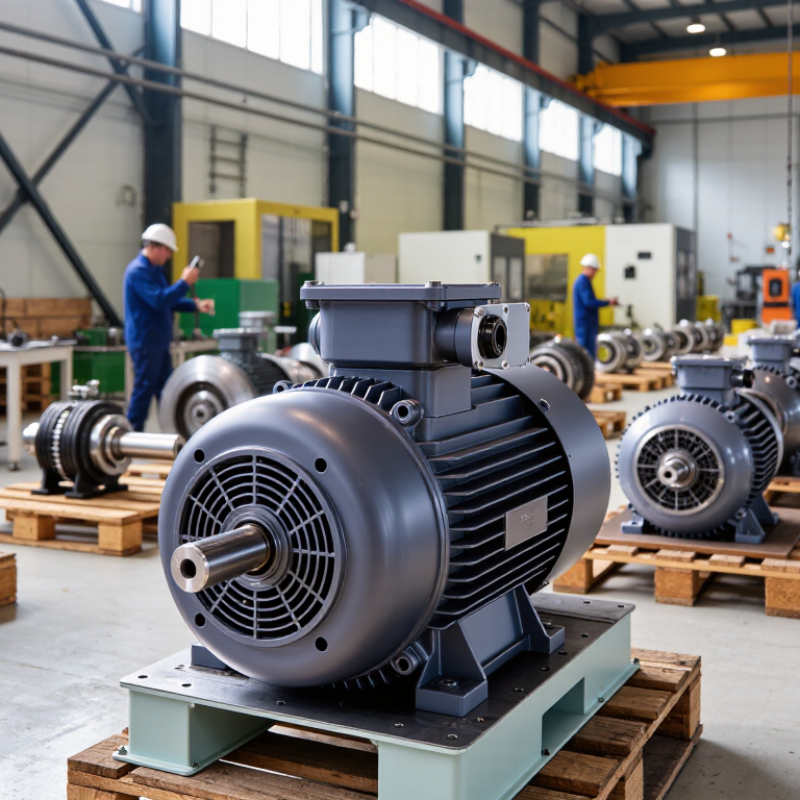
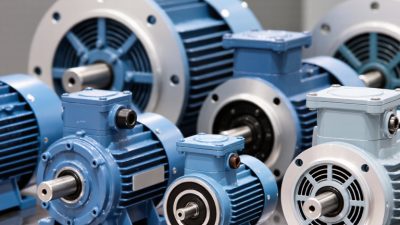
A cast iron motor uses a rigid iron frame to protect its stator, rotor, bearings, and internal windings. The housing handles heat, vibration, and mechanical stress better than many lighter materials. Its weight also helps reduce movement on a factory base. That matters near pumps, compressors, and gear-driven equipment.
These motors serve demanding industrial applications. You will find them on conveyors, crushers, fans, machine tools, and irrigation systems. In dusty workshops, a properly sealed enclosure can limit contamination. In chemical or outdoor areas, engineers must check coating quality, cable entries, and corrosion resistance. A cast iron body alone does not guarantee durability.
Motor selection requires more than checking horsepower. Engineers should match voltage, frequency, speed, duty cycle, insulation class, and protection rating. Bearing design deserves attention, especially where belts create side loads. A reliable supplier should provide test records, dimensional data, efficiency information, and traceable material details. Practical inspection still matters. Check the feet, shaft finish, terminal box, and paint adhesion before installation. I have seen strong motors fail because alignment was ignored. That mistake is easy to repeat. Noise and temperature should be recorded during commissioning, not guessed later. Cast iron can be excellent, but it is not automatically the best choice for every installation.
| Data Dimension | Typical Technical Data | What It Defines | Industrial Relevance and Applications | Reference Basis |
|---|---|---|---|---|
| Motor Construction | Three-phase squirrel-cage induction motor with a cast-iron frame, end shields, or both | The term “cast iron motor” normally describes the mechanical housing material rather than a separate motor principle | Common in pumps, fans, compressors, conveyors, machine tools, mixers, and general-purpose industrial equipment | IEC 60034 series; manufacturer designs may vary |
| Frame Material | Gray cast iron is widely used for robust industrial motor frames; material grades are selected according to the applicable design standard | Provides high stiffness, vibration resistance, and protection against mechanical impact compared with many lightweight housing designs | Suitable for continuous-duty machinery, heavy production lines, workshops, process plants, and demanding mounting environments | Material selection depends on the motor design and applicable national or international standards |
| Operating Principle | AC power creates a rotating magnetic field in the stator; electromagnetic induction produces torque in the squirrel-cage rotor | Explains the reliable, brushless operation of the most widely used industrial AC motor type | Used for fixed-speed or inverter-controlled drives where ruggedness, low maintenance, and high availability are important | IEC 60034-1 and established induction-motor engineering practice |
| Common Supply | Three-phase systems such as 400 V at 50 Hz or 460 V at 60 Hz are common in industrial installations; actual voltage and frequency must match the nameplate | Electrical compatibility depends on the motor nameplate, local grid, connection method, and tolerance requirements | Used in factory power systems, water-treatment plants, HVAC installations, material-handling systems, and process equipment | IEC 60034-1; local electrical codes also apply |
| Rated Duty | S1 continuous duty is widely used for motors designed to operate at a constant load for sufficient time to reach thermal equilibrium | Indicates whether the motor can operate continuously at its rated load under specified conditions | Appropriate for pumps, ventilation systems, conveyors, compressors, and other continuously operating machinery | IEC 60034-1 duty classifications |
| Efficiency Classification | IEC efficiency classes include IE1, IE2, IE3, and IE4; higher classes generally indicate lower operating losses at the specified rating and test conditions | Helps compare energy performance between motors of similar rating and operating conditions | Important for equipment with long annual running hours, including pumps, fans, compressors, and production conveyors | IEC 60034-30-1 |
| Ingress Protection | IP55 is a common industrial rating: protection against harmful dust deposits and water jets from any direction, subject to test conditions | Describes the enclosure’s resistance to solid particles and water ingress; it does not indicate corrosion resistance | Suitable for many indoor industrial environments and selected sheltered outdoor applications when installation conditions are appropriate | IEC 60034-5; the complete IP code must be verified on the nameplate |
| Insulation System | Class F insulation is widely used in industrial motors; the permitted temperature rise depends on the design, loading, ambient temperature, and standard requirements | Defines the thermal capability of the winding insulation system | Supports reliable operation in factories and process facilities when ambient temperature, altitude, and cooling conditions are within specifications | IEC 60085 and IEC 60034-1 |
| Cooling Method | IC411 is a common arrangement: totally enclosed motor with an external fan and a ribbed external surface for heat dissipation | Separately identifies how heat is removed from the motor enclosure | Frequently applied to general-purpose industrial motors, pumps, conveyors, compressors, and fans | IEC 60034-6 |
| Mounting Arrangements | Typical IEC configurations include foot-mounted B3, flange-mounted B5, and face-mounted B14; combined versions are also available | Determines how the motor connects mechanically to the driven machine | Allows integration with gearboxes, pumps, fans, compressors, conveyors, and custom machinery | IEC 60034-7 and IEC 60072 dimensional practice |
| Speed Range | Common 50 Hz induction-motor speeds include approximately 3,000 rpm for 2-pole, 1,500 rpm for 4-pole, 1,000 rpm for 6-pole, and 750 rpm for 8-pole designs before slip | Actual operating speed is slightly lower than synchronous speed because of motor slip and load | Speed selection affects pump flow, fan performance, conveyor speed, compressor output, noise, and energy consumption | Based on synchronous-speed relationships and normal induction-motor operation |
| Variable-Frequency Drive Compatibility | Many modern industrial induction motors can operate with a variable-frequency drive when the motor insulation, cooling, bearing protection, and speed range are suitable | VFD suitability is an application requirement, not an automatic feature of every cast-iron motor | Enables process control and potential energy savings in variable-torque loads such as centrifugal pumps and fans | IEC 60034-17 and IEC 60034-25 provide guidance for converter-fed motors |
| Typical Power Range | Industrial cast-iron motors are available across a broad range, from small fractional or low-kilowatt ratings to large medium-voltage machines | There is no single universal power range for the term “cast iron motor” | Selection should be based on required shaft power, starting load, service factor, duty cycle, efficiency, speed, and installation conditions | Exact range depends on the motor series, frame size, voltage, and manufacturer design |
| Environmental Considerations | Ambient temperature, altitude, humidity, dust, corrosive chemicals, washdown exposure, and hazardous-area classification must be evaluated separately | A cast-iron enclosure alone does not guarantee suitability for severe corrosion, explosive atmospheres, or outdoor exposure | Critical for chemical plants, mines, wastewater facilities, food-processing areas, coastal sites, and outdoor installations | IEC 60034-1, IEC 60079 where applicable, and site-specific regulations |
| Selection Checklist | Power, voltage, frequency, rated speed, efficiency class, IP rating, insulation class, duty, mounting, shaft dimensions, bearings, ambient conditions, and starting method | Provides the minimum technical information needed to compare suppliers and confirm interchangeability | Reduces the risk of overheating, incorrect mounting, poor starting performance, excessive vibration, and premature bearing or winding failure | Final selection must be confirmed against the motor nameplate, technical datasheet, and applicable installation standards |
Related Posts
-
Top Cast Iron Motor Manufacturers for Global Buyers?
-
Unlocking Efficiency with the Best Cast Iron Motor Advantages for Global Buyers
-
7 Best Cast Iron Motors for Industrial Buyers?
-
Unmatched Quality of Best Cast Iron Motors from World Leading Chinese Manufacturers
-
Top 10 Cast Iron Motor Manufacturers in China at the 137th Canton Fair
-
2026 How to Choose the Right Industrial Motor for Your Business Needs?
-

Phone
Phone
0086-13586199782
-

E-mail
-

Whatsapp
-

Wechat
Wechat

-

Top