
WELCOME TO ZHEJING ZHUHONG!
e945ab7861e8d49f342bceaa6cc1d4b

China Best Electrical Fan Motor Manufacturer

Selecting a China Best Electrical Fan Motor Manufacturer requires more than comparing prices. Buyers should examine efficiency data, winding quality, bearing choices, noise levels, and production consistency. These details matter when a motor runs for hours inside a ventilation unit, ceiling fan, or cooling system. Small design differences can affect heat, vibration, and service life.

The International Energy Agency’s 2011 report, Energy-Efficiency Policy Opportunities for Electric Motor-Driven Systems, estimates that motor systems use about 45% of global electricity. The report was co-authored by energy-efficiency expert Paul Waide and Conrad Brunner. It states, “Electric motor systems are responsible for about 45% of global electricity consumption.” That figure covers motor-driven systems broadly, not fan motors alone. Still, it explains why efficient motor selection deserves close attention. Look for test results tied to clear operating conditions, rather than broad efficiency claims.

The right Electrical Fan Motor depends on airflow, pressure, voltage, speed control, and the intended duty cycle. A capable manufacturer should explain how its motor matches those requirements and provide traceable quality checks. Ask about sample testing, temperature rise, balancing, and production tolerances. Ask for evidence.

A polished specification sheet helps, but it cannot replace consistent factory performance. This is where buyers should remain cautious. Supplier claims can be difficult to compare when test methods differ. A reliable partnership rests on measurable results, practical engineering support, and honest answers when a design needs refinement.
China Best Electrical Fan Motor Manufacturer

Types of Electrical Fan Motors Manufactured in China

China Best Electrical Fan Motor Manufacturer

Types of Electrical Fan Motors Manufactured in China

Chinese manufacturers commonly make shaded-pole, permanent-split-capacitor (PSC), and brushless DC motors for fans. Shaded-pole motors have a simple structure and suit compact exhaust or appliance fans. Their starting torque and efficiency are modest. PSC motors use a run capacitor and are widely used in ceiling, pedestal, and ventilation fans. They offer steady operation, though the capacitor may need attention over time.

Brushless DC motors use electronic controls to adjust speed and can reduce energy use in suitable designs. They appear in modern household and commercial fans. External-rotor motors are another common configuration, especially for axial fans; the rotor surrounds the stator, creating a compact assembly.

Small details matter. Shaft size, mounting holes, voltage, frequency, and airflow needs should all match the fan design. Ask suppliers for test data on noise, vibration, temperature rise, and speed performance. A motor that looks efficient on paper may not perform as expected in a particular housing. That trade-off is worth checking with a sample.

Key Components and Working Principles of Fan Motors

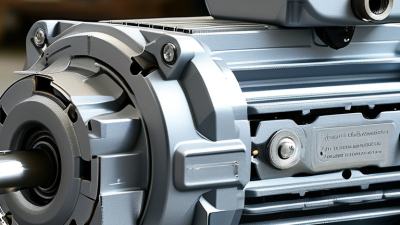
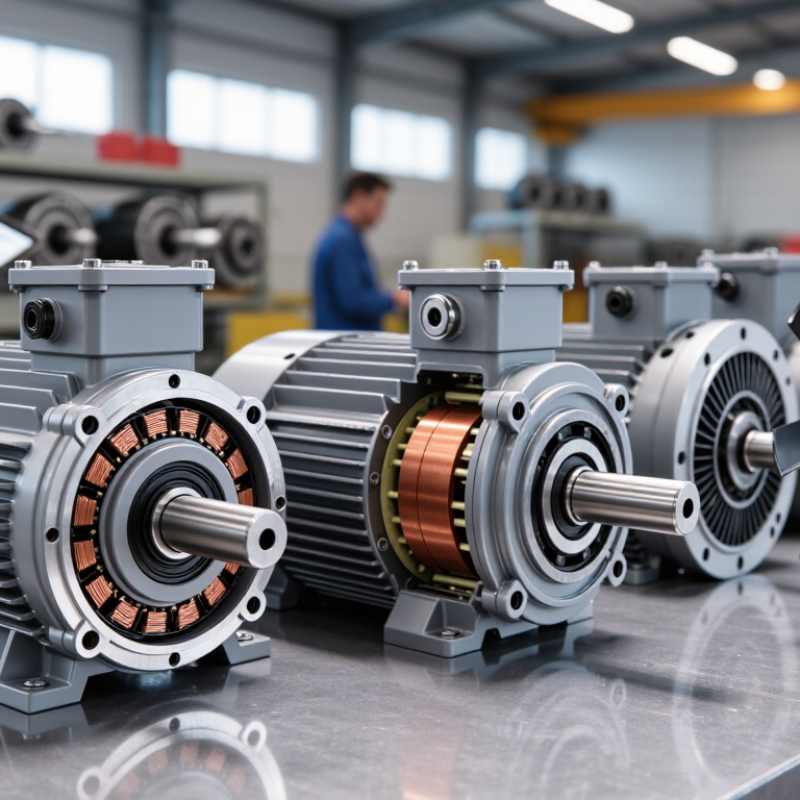
A fan motor converts electrical energy into shaft rotation, driving the impeller that moves air. Its main parts include a laminated steel stator, copper windings, a rotor, bearings, and a shaft. In many AC designs, alternating current creates a rotating magnetic field, which induces rotor motion. Brushless DC motors use electronic controls to switch current through the windings. Small parts matter. A worn bearing can add friction, noise, and heat, even when the motor still runs. The International Energy Agency’s Energy Efficiency 2023 report notes that electric motor systems consume more than 40% of global electricity, making efficiency a practical design concern.


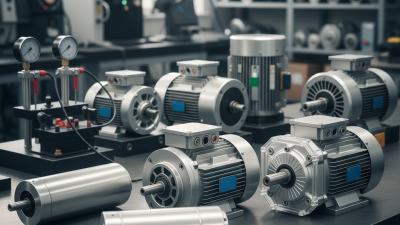
In production checks, technicians can measure winding resistance, insulation condition, vibration, and temperature under load. A steadily rising housing temperature may indicate excess friction, poor ventilation, or an unsuitable operating point; it does not identify one cause by itself. Bearing fit and rotor balance also affect smooth operation. I would not judge a fan motor by rated power alone. Airflow, pressure, duty cycle, and control method shape real-world performance. Small motors can be deceptively difficult to assess. A useful test records current and temperature after the motor reaches a stable operating condition, while noting ambient temperature and load. That record makes comparisons more reliable, though test conditions still need careful interpretation.

Manufacturing Standards and Quality Control Processes

China Best Electrical Fan Motor Manufacturer

For a China-based electrical fan motor manufacturer, quality control starts with traceable materials and stable production settings. Incoming checks should verify copper wire diameter, insulation condition, bearing clearance, and steel-lamination thickness. These details affect winding consistency, noise, heat, and service life. IEC 60034-1 sets general requirements for rotating electrical machines, while IEC 60034-2-1 describes efficiency testing methods. A documented process helps connect these standards to actual production checks.

Small details matter. The International Energy Agency’s 2011 report, Energy-Efficiency Policy Opportunities for Electric Motor-Driven Systems, estimates that motor-driven systems use about 53% of global electricity. That scale makes efficiency testing more than a paperwork exercise. Manufacturers can sample winding resistance, insulation strength, vibration, temperature rise, and airflow under defined conditions. Each result should link to the motor’s batch and test equipment. Calibration records matter too. A test is only useful when its instruments are reliable.

Quality data should also change the process. If vibration readings drift, technicians can inspect rotor balance, bearing fit, and assembly alignment before shipment. Not every variation has an obvious cause. That uncertainty should be recorded, not hidden behind a pass stamp. A clean test sheet is not the whole story; field feedback and corrective-action records help reveal weaknesses that factory sampling may miss.

China Best Electrical Fan Motor Manufacturer - Manufacturing Standards and Quality Control Processes

Manufacturing Stage Quality Dimension Control Method Acceptance Basis and Records Relevant Standard or Reference
Supplier and incoming-material control Traceability and conformity of electrical steel, copper wire, insulation materials, bearings, and molded components Review supplier documentation; verify part numbers and material identification; inspect dimensions and visible condition; retain batch or lot details Approved drawings, purchase specifications, and applicable material requirements; incoming inspection records and traceability details ISO 9001 quality management principles; customer and product specifications
Core and component preparation Core dimensions, lamination condition, shaft dimensions, and bearing-seat fit Dimensional inspection using calibrated measuring equipment; visual checks for burrs, damage, and contamination Approved engineering drawings and documented inspection plans; results recorded against defined tolerances Product drawings and measurement-equipment control procedures
Winding and insulation Winding configuration, conductor placement, insulation integrity, and lead connections Verify winding data and connection points; inspect coil placement; perform specified electrical checks, such as winding-resistance and insulation tests Motor design specifications and the applicable safety requirements; test limits must be defined for the motor design and rated voltage IEC 60335-1 and IEC 60335-2-80 may apply to covered household and similar-use fans; applicability depends on the finished product
Rotor and stator assembly Assembly alignment, air gap, rotor freedom, and fastening security Check assembly dimensions and clearances; inspect fastening and rotation; use defined work instructions and in-process checks Approved assembly drawings, process specifications, and documented inspection criteria Manufacturer’s controlled drawings and process documentation
Electrical testing Electrical continuity, winding resistance, insulation performance, and functional operation Use suitable calibrated test equipment; apply tests specified for the design and product safety assessment; record results by unit or production lot as required Design-specific limits and applicable product requirements; test voltage and acceptance limits should not be assumed to be identical for all motors Applicable safety standard and approved test procedure
Performance verification Rated voltage, current, input power, speed, and operating behavior Run the motor under defined test conditions and compare measured results with its rating and approved performance specification Motor nameplate ratings, product specification, and specified test conditions; retain measurement results IEC 60034-1 provides general rating and performance requirements for rotating electrical machines where applicable
Efficiency testing, when specified Efficiency and loss determination Use a recognized test method appropriate to the motor type and declared efficiency requirements Test method, operating point, and reporting basis must be stated; efficiency requirements depend on motor category and applicable regulation IEC 60034-2-1 specifies methods for determining losses and efficiency from tests for covered rotating electrical machines
Noise and vibration checks Abnormal sound, vibration, and mechanical stability Operate the motor under defined mounting and load conditions; use a documented listening or measurement procedure where required Customer specification or product-level limits under stated test conditions; avoid comparing results from different setups without accounting for the method Product specification and applicable acoustic or vibration test method
Final inspection and release Labeling, workmanship, accessories, and production-record completeness Check identification and markings, inspect visible workmanship, verify required test records, and confirm packaging requirements Approved product documentation, order requirements, and release checklist; nonconforming items should be identified and controlled ISO 9001 principles for documented information, monitoring, and control of nonconforming outputs

Important: Standards and test limits depend on the motor design, intended application, destination market, and applicable certification requirements. This table is a general quality-control framework, not a claim that every listed standard applies to every fan motor.

How to Evaluate a Chinese Fan Motor Manufacturer

China Best Electrical Fan Motor Manufacturer

How to Evaluate a Chinese Fan Motor Manufacturer

Choosing a Chinese fan motor manufacturer takes more than comparing quotations. Start with the motor’s intended use, operating hours, voltage, noise limits, and expected production volume. A supplier should explain how its design meets those needs, not simply promise a low price. Ask for motor drawings, material specifications, and test reports for the exact model under consideration.

Look closely at production controls. Can the manufacturer trace copper wire, bearings, and finished units by batch? Ask how it checks winding resistance, temperature rise, vibration, and noise. If possible, review sample results and inspect a motor after a continuous run. Small details matter. A tidy workshop tour is useful, but it cannot show how every shift handles defects. Request records from routine production, not only a specially prepared sample.

Communication is part of technical evaluation. Send a clear specification and note how the engineering team responds to questions about tolerances, customization, and delivery changes. Confirm sample lead time, inspection arrangements, packaging, and what happens when a batch fails agreed criteria. Ask for records. A supplier may provide strong documents yet still need time to resolve a design issue; that is worth acknowledging. Compare evidence and follow-through, rather than relying on confident claims alone.

Applications, Customization, and Export Services

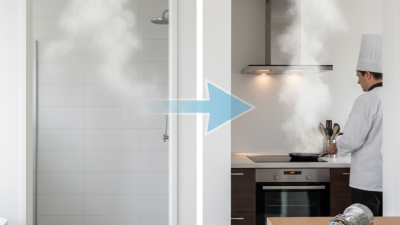
Electrical fan motors serve ventilation units, HVAC equipment, refrigeration systems, and appliance fans. Each application places different demands on airflow, operating hours, temperature, and available space. A motor selected for a compact bathroom fan may not suit a dusty workshop exhaust unit. Details matter.

Customization usually starts with the installation drawing and operating conditions. Buyers can discuss rated voltage and frequency, output, speed, shaft length, mounting points, insulation, bearing type, and lead-wire position. These details affect fit and maintenance as much as performance.

A capable manufacturer checks the duty cycle and expected ambient temperature before recommending a configuration. Still, drawings sometimes omit awkward site constraints; a quick measurement can prevent an avoidable mismatch.

Export support should make the order easier to verify and receive. Ask for a clear specification sheet, inspection records, packing details, and shipment documents appropriate to the destination. Packaging should protect the shaft and terminals from impact and moisture during transit. Confirm labeling and any applicable market standards with the importer, since requirements differ. Small checks help.